




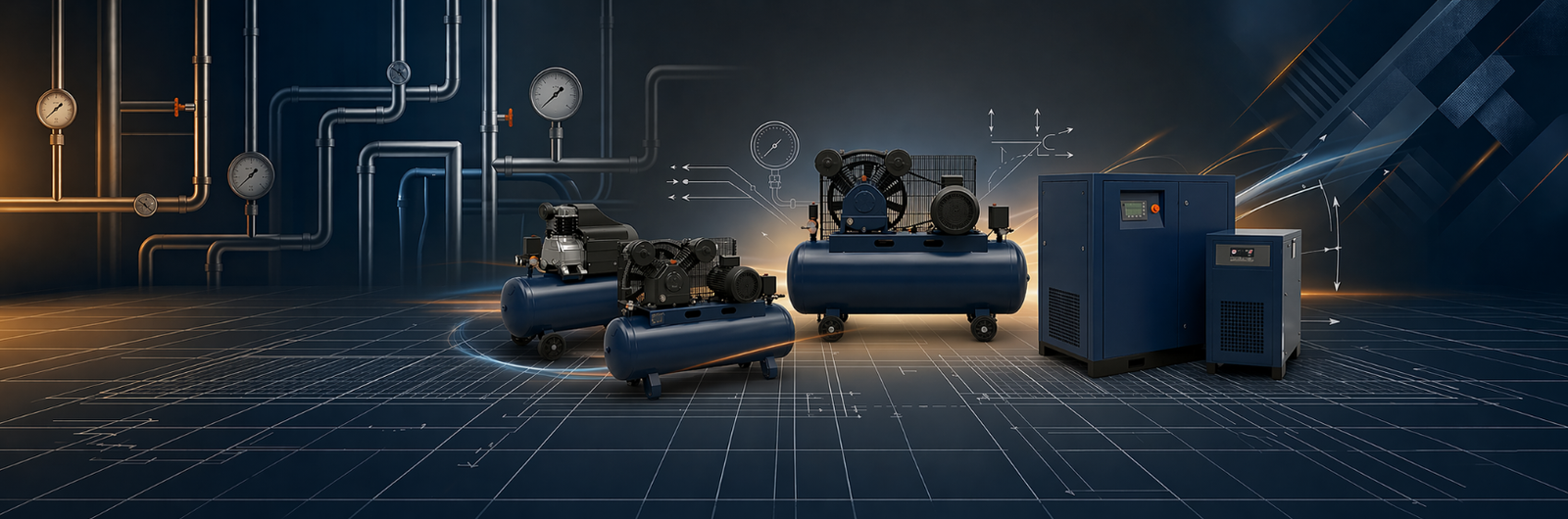
Freight is the part of an import order nobody sees on the quotation. It hides inside the landed cost, and it is usually the reason two suppliers with the same machine price end up far apart. If you are importing air compressors by sea, the first practical question is simple: how many units go into one 40HQ container? The answer decides your per unit freight cost, and it decides whether a mixed order makes economic sense at all.
Starting from the container, not from the machine
A 40 foot high cube container has internal dimensions of roughly 12.03 m long, 2.35 m wide and 2.69 m high. Those figures come from ISO 1496-1, which specifies series 1 freight containers, and individual boxes vary a little by manufacturer. That works out to about 76 m³ of geometric volume. Nobody loads 76 m³ of machinery into it. Pallet overhang, the door recess, the need to leave a working gap for the forklift, and the shape of the crates all eat into that number. In our experience, a realistic planning figure for crated compressors is 65 to 68 m³, and we plan on the low side when the load includes machines with tall vertical receivers.
The weight side is usually less of a constraint than people expect. A 40HQ typically allows a payload around 26 to 28 tonnes depending on the shipping line and the route, and a diesel or electric screw compressor in the 22 kW to 37 kW range lands somewhere between 450 kg and 900 kg. Fill the volume first and you will rarely hit the weight ceiling. The exception is piston machines with large horizontal receivers, which are heavy for their footprint, and a full container of them can approach the limit.
Turning dimensions into a load plan
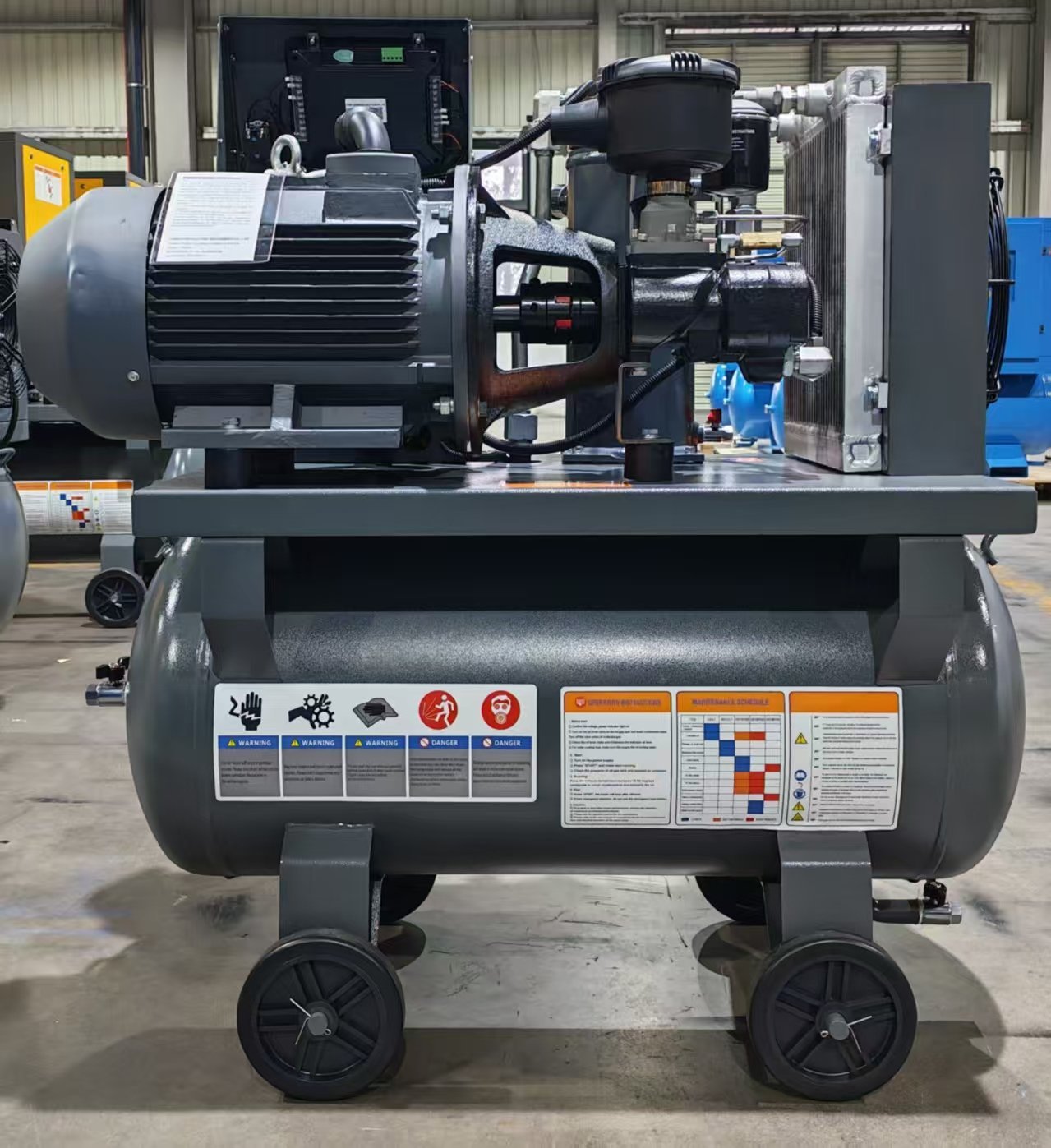
The calculation itself is not complicated. Measure the packing footprint of one crate in metres, multiply length by width by height to get its cubic metres, and divide your usable container volume by that number. Then round down, because crates do not tessellate. A 7.5 kW screw unit on a skid with a 100 L receiver occupies roughly 1.3 m × 0.9 m × 1.4 m, which is about 1.6 m³. In theory that gives you more than forty units per container. In practice you will load somewhere in the high twenties, because you also need space for the desiccant packs, the wooden blocking, and the spare parts cartons that go in with the machines.
We do this exercise for every consolidated order before we quote, using the packing drawings rather than the bare machine dimensions. A machine on a skid is not the same size as the same machine inside a plywood crate with a 25 mm wall allowance on every side. Miss that and you will be short by two or three units, which is usually enough to push a marginal order into loss.
Where the container really gets decided: the receiver tank
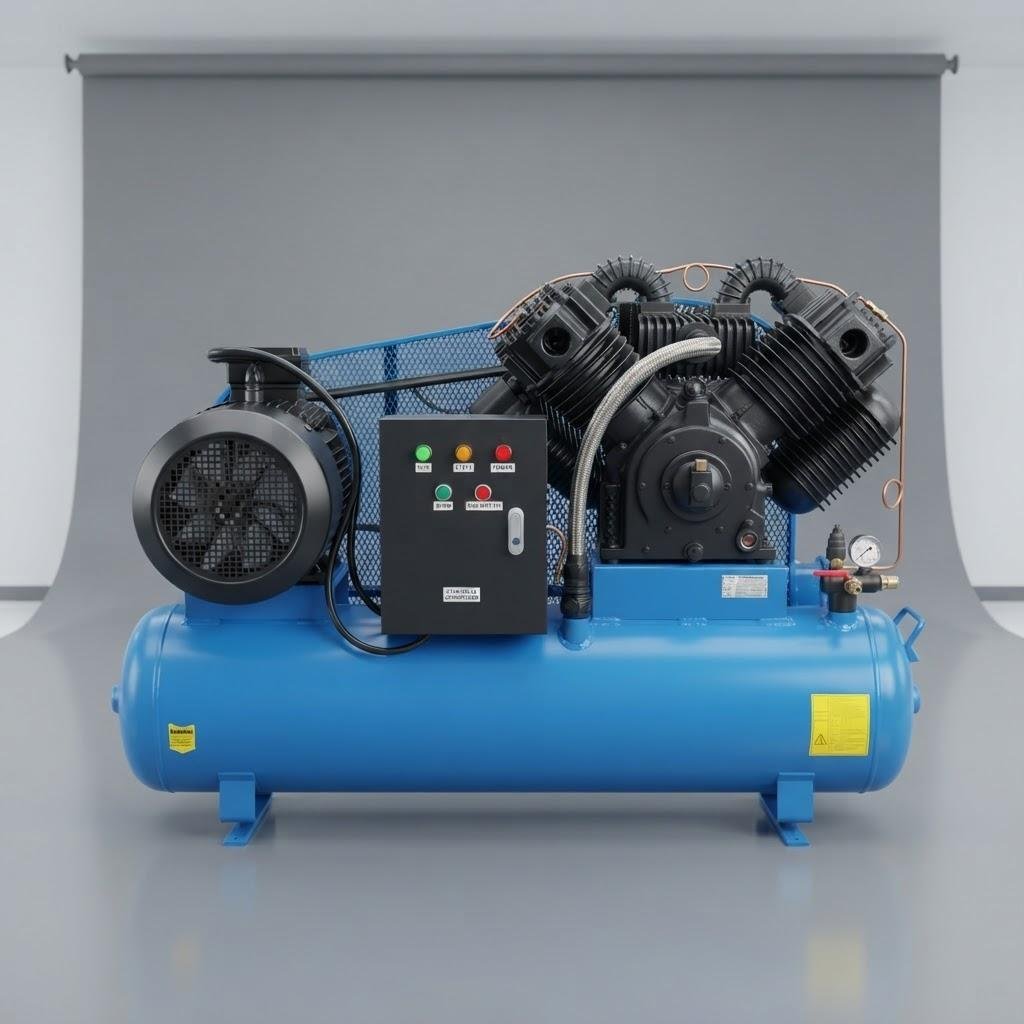
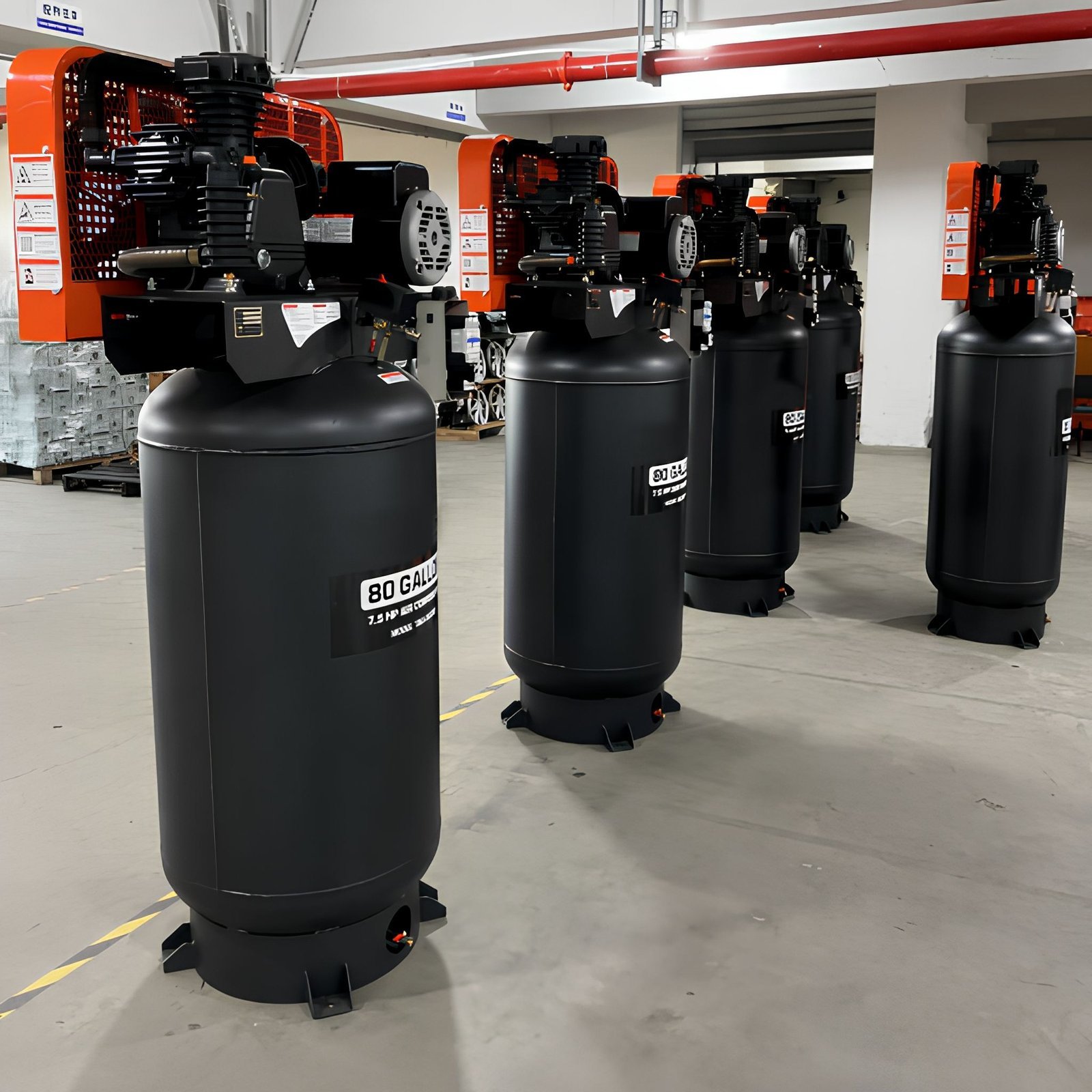
Vertical and horizontal receivers change the load plan more than the compressor itself. A vertical tank is tall and narrow, which suits a 40HQ because the height is the one dimension you have spare. A horizontal tank is wide and low, and two of them side by side can already consume most of the 2.35 m internal width once crating is added. If your market does not care about the orientation, tell us before we build. A vertical receiver on a 500 L machine can be the difference between eight units and eleven units in the same container.
Machine height also decides whether you can stack. Some small units with a low profile can go two high on a rack, but we do not plan for double stacking as standard practice. The crate has to carry the load of the one above it, the floor of the one below has to take the point loads, and a container that has been handled by a sloppy terminal will test every assumption you made. We would rather ship a container that is 80 percent full and arrives clean.
What we do before the truck leaves
Every export unit gets a sequence at our end. The machine is run tested, drained, then sealed. Bare steel and machined surfaces get a protective coating, and the crate gets desiccant bags sized to the internal volume, not to the machine. The crate is then blocked and braced inside the container with timber, and the doors get a last check for load shift before sealing. We photograph the load before the doors close, so if something arrives damaged there is a record of how it left.
That last step has saved arguments with carriers more than once. It also tells us things about our own packing. We used to ship smaller units on pallets without full crates to save volume, and the damage rate eventually convinced us that the volume saved was not worth the claims. Loose palletised units get handled by fork tines from the side, and a fork through a sheet metal panel is a total loss, not a repair.
Landed cost, and the part that catches people out
Freight is one line of the landed cost, and it is rarely the biggest. Duty and import taxes follow your country’s HS classification for compressors, and they can dwarf the ocean freight on a compact, high value machine. Then there is inland delivery, terminal handling, customs clearance, and the cost of the container sitting at your yard for the days it takes to unload. A container that is cheaper to ship but takes an extra day to unload is not cheaper.
This is also where LCL enters the conversation. Below roughly 12 to 15 m³ of cargo, the per cubic metre rate of LCL can look attractive, and for a single sample machine it usually is. For three or four machines, the handling at both ends usually erases the difference, and the risk profile changes: your crate gets moved individually at a shared facility instead of staying sealed inside a container. We tell customers to run both numbers and to include the damage risk, not just the rate.
A note on mixing product lines
One container does not have to hold one model. The common arrangement is a main line of screw compressors with a smaller quantity of dryers or a few piston units to cover the low power end of the customer’s catalogue. Mixing works because the shapes complement each other: a compact refrigerated dryer takes the gaps that a tall screw unit leaves. What does not work is mixing two products that both ship in tall crates, because the height is shared and nothing nests.
If you want to see what our compact units look like before planning a load, the screw air compressor range lists the models with their dimensions, and the air dryer range is where the smaller companion units sit. Both are worth checking before you decide to consolidate.
How to get a load plan out of us
Send us the models and quantities you want, together with the destination port, and we will work out the packing list, the total cubic metres, and the number of containers it takes. We will also tell you when an order is one unit short of filling a container, because that is the point where adding a few machines costs almost nothing in freight. There is no benefit in us quoting a container you did not need.
For anything commercial, the fastest route is the Kontaktseite, and you can read more about how we build and pack machines on the about page. We are the manufacturer, so the drawings and the load plan come from the same people who assemble the machines.
Reviewed by the SAYI application engineering team, October 2026.