










A powder coating line had a recurring defect. Random patches of finish would crater into what the operators called fisheyes, maybe twice a shift. They’d already changed paint batches, changed guns, sent somebody to a training course. What eventually fixed it was 20°C of dew point.
Compressing air concentrates everything the atmosphere carries, including water. Every cubic metre drawn into the intake brings vapour that condenses out the moment that air cools in your pipework. Deal with it and a whole family of mysterious production problems disappears. Leave it and no amount of downstream troubleshooting ever quite solves them.
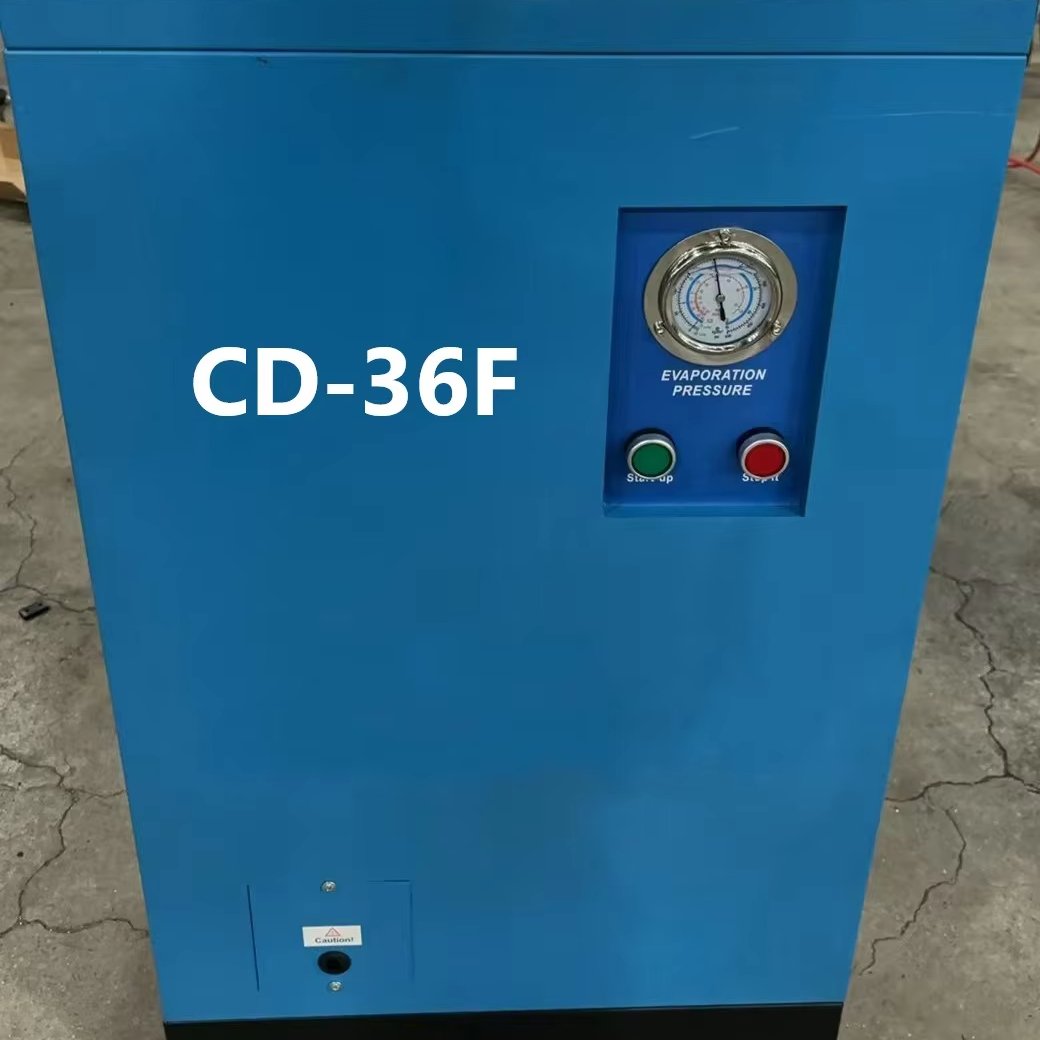
The usual fork in the road is a refrigerated dryer or a desiccant dryer. They differ by roughly forty degrees of dew point and by considerably more than that in running cost. Here’s how to pick without buying capacity you’ll never use.
Dew point, in terms anyone can use
Dew point is simply the temperature at which water vapour in air starts condensing into liquid water. In compressed air we nearly always talk about pressure dew point (PDP), measured at line pressure, because that’s the condition the water actually sees. It is not the same thing as atmospheric dew point, and mixing the two up is the most common specification error in this whole topic.
Two things follow immediately:
- A pressure dew point below your coldest ambient temperature means no liquid water appears anywhere in the system. That is the whole principle. If the coldest your pipework ever gets is 5°C, a PDP of +3°C does the job. If part of your line runs outdoors in a European winter and reaches minus 15°C, it does not.
- Every ten degrees lower costs real money. And the further down you go, the more it costs per degree.
Typical figures worth memorising:
| Dryer type | Typical pressure dew point |
|---|---|
| Refrigerated | +3°C to +7°C |
| Membrane | +2°C down to −20°C (select models, low flows) |
| Desiccant (heatless) | −40°C, sometimes −70°C |
| Desiccant (heated / blower purge) | −40°C standard |
That +3°C figure isn’t arbitrary. It sits just above freezing, because a refrigerated dryer cannot go below 0°C. Ice would form in the heat exchanger and block it. If you need a dew point below freezing, you are no longer choosing between types. You need desiccant.
What the water is actually doing to you
Before choosing, it helps to know what you’re buying protection against:
- Corrosion inside the distribution. Water plus oxygen inside steel pipe produces rust particles that travel downstream and destroy solenoid valves and cylinders. Most “our pneumatics keep failing for no reason” stories start here.
- Product defects. Paint and powder coating fisheyes, moisture in food or pharma product, clumping in powder handling, spotting on glass and optics.
- Frozen lines and instruments. Anything outdoors, in a cold warehouse or in a freezer application.
- Air tools and bearings washed of lubricant. Water strips the grease out of pneumatic tools at speed.
- Instrument air errors. Pneumatic controls and measurement devices behaving intermittently, usually worst on Monday mornings after a cold weekend.
Note that oil and water are separate problems. Oil-free compression, like our 오일 프리 스크롤 제품군, gets rid of the oil question entirely. It does nothing about water. We still get asked this weekly, so it’s worth saying plainly: oil-free does not mean dry.
The ISO 8573-1 water classes
If you want a defensible specification rather than a feeling, ISO 8573-1 classifies compressed air by water content. The 2010 version gives these classes for liquid water content expressed as pressure dew point:
| Class | Pressure dew point |
|---|---|
| Class 1 | ≤ −70°C |
| Class 2 | ≤ −40°C |
| Class 3 | ≤ −20°C |
| Class 4 | ≤ +3°C |
| Class 5 | ≤ +7°C |
| Class 6 | ≤ +10°C |
(Class 0 isn’t a fixed number. It’s whatever user and supplier agree, and it’s rarely specified outside semiconductors and pharma.)
The practical upshot is simple. Class 4 is what a standard refrigerated dryer gives you. Everything from Class 3 downward requires adsorption, which means desiccant. Specifying Class 2 when your process only needs Class 4 isn’t quality; it’s overspending on every operating hour from now on.
Refrigerated dryers: the workhorse
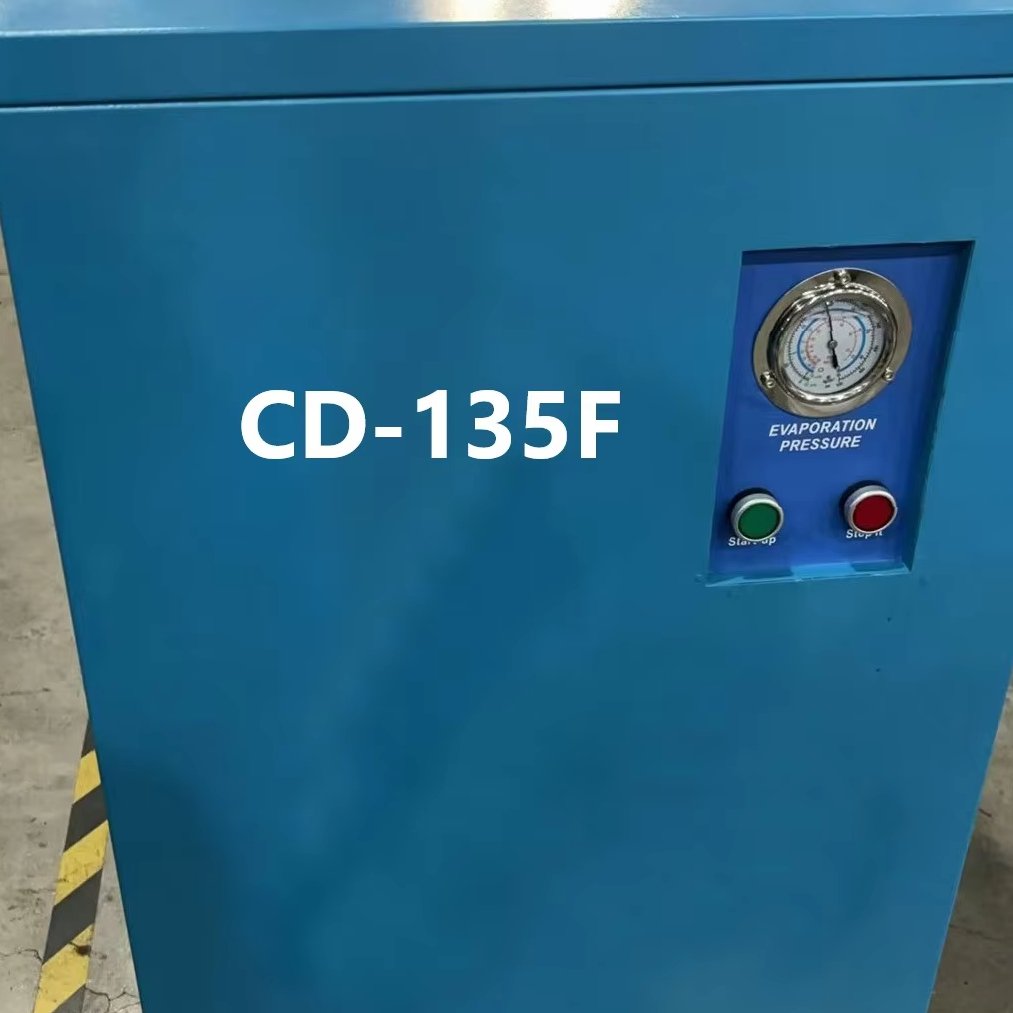
How it works: hot, wet compressed air enters a heat exchanger, gets chilled down to around 2–5°C, the water condenses out and gets drained, and the now-dry air is warmed back up against the incoming stream before it leaves. That last part matters more than it sounds. Reheating the outgoing air stops condensation forming on the outside of your pipes in humid weather, which surprises people who install undersized units and then find everything dripping.
What you get:
- Pressure dew point around +3°C (ISO Class 4).
- Low running cost. Power mainly goes to the refrigeration compressor, typically a fraction of what the same flow would cost to dry with desiccant.
- Very little maintenance. Clean the condenser, check the drain, check the fan. That’s about it.
- No purge air loss. Nothing is vented to atmosphere to regenerate a bed.
이를 제한하는 요인은 다음과 같습니다:
- It can’t go below freezing. Physically impossible for the standard cycle.
- Ambient temperature matters. In a hot compressor room in summer, a cheap unit may not hold dew point. Check the derating curve once ambient heads toward 40°C. Our summer overheating notes explain why the compressor room gets hotter than most people think.
- Turndown. High intake loads at low flow can drive dew point up. Look for units with a hot-gas bypass or a cycling refrigeration compressor if your demand varies.
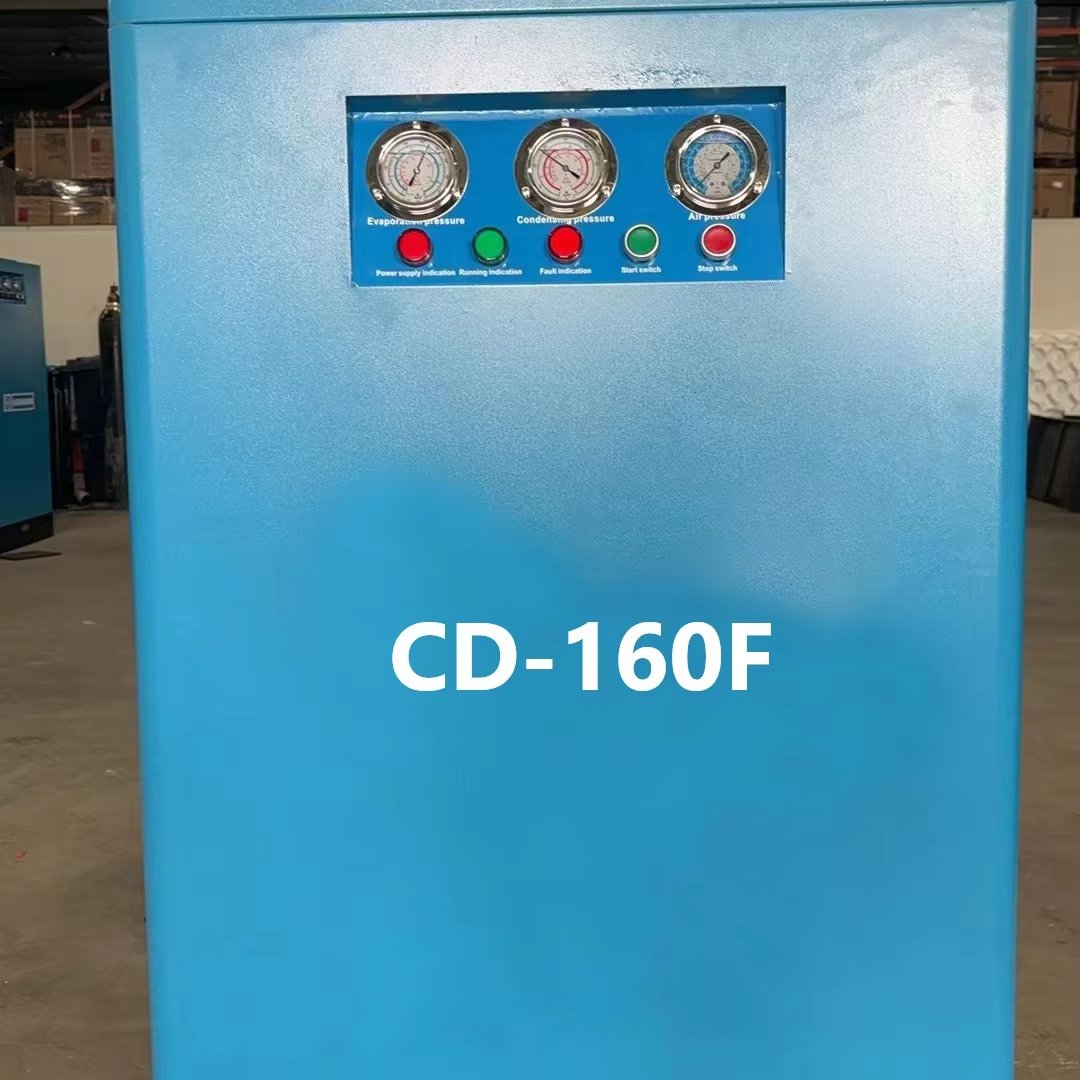
Our range covers the typical industrial band — the compact CD-36F suits small workshops and point-of-use duty, the CD-135F covers mid-size plants, and the CD-160F 그리고 CD-65F sit in between. Full set in the air dryer category.
Desiccant dryers: for when you genuinely need below freezing
How it works: air passes through a bed of adsorbent material (usually silica gel or molecular sieve) that grabs the water vapour. When the bed is saturated it switches, and the second bed takes over while the first is regenerated. Twin towers, cycling on a timer or on dew point demand.
The dew point you get: −20°C to −70°C, typically quoted as −40°C standard.
The catch is regeneration. Getting water back out of desiccant costs either air or heat:
| Regeneration method | Typical purge / energy penalty |
|---|---|
| Heatless (no external heat) | 15–20% of rated flow vented as purge |
| Externally heated | ~7–8% purge plus heater energy |
| Blower purge (heated ambient air) | ~2–4% plus blower and heater energy |
| Compression heat (uses waste heat from the compressor) | Near zero purge |
Read that first row again. Twenty percent. With a heatless unit you are quite literally throwing away a fifth of the compressed air you already paid to make, continuously. On a big machine that dwarfs the purchase price within a year or two. Heatless dryers exist for a good reason. They’re simple, there are no heaters to fail, and for intermittent or very small flows they’re often the right answer. Just don’t buy one thinking it’s the efficient option.
Blower-purge and compression-heat units cost much more up front and pay it back over time on big continuous systems. There’s a crossover point where they become obvious, and it moves depending on your kWh price and running hours. Worth doing on paper rather than guessing.
Where desiccant genuinely earns its keep:
- Air lines running outdoors or in unheated space in cold climates.
- Frozen food, cold storage, any process below freezing.
- Painting, coating, optics and electronics where even trace water causes rejects.
- Pharma and food contact air with a documented air quality class.
- Instrument air for pneumatic control systems.
- Bulk powder and dry-material conveying, where a bit of moisture turns into a very expensive blockage.
Side-by-side summary
| Refrigerated | Desiccant | |
|---|---|---|
| Typical PDP | +3°C | −20°C to −70°C |
| ISO 8573-1 water class | Class 4 | Class 2–3 typically |
| 구매 비용 | Lower | Higher (2–4× common) |
| Running cost | 낮음 | Higher; purge dependent |
| 유지보수 | 미니멀 | Moderate; desiccant replacement periodically |
| Freezes below 0°C? | Impossible | Yes, that’s the point |
| Right for | Indoor general industrial | Cold, critical or documented applications |
The mistakes worth avoiding
Specifying −40°C because it sounds safer. If the coldest your air gets is 10°C indoors, you need Class 4 and nothing more. The extra dew point buys you nothing except a power bill.
Forgetting the moisture separator. A dryer without good upstream separation, meaning a cyclone separator plus a decent drain, has to do work it wasn’t designed for. Most “this dryer doesn’t meet spec” complaints trace back to this, or to the receiver being on the wrong side of the dryer.
Ignoring the location. Dryer after the receiver is the standard layout, giving wet, hot air somewhere to drop its bulk water before it reaches the drying stage. There are exceptions for very small systems, but if you’re unsure, that’s the default answer.
Undersizing for peak flow. Dryers are rated at reference conditions. High ambient temperature, high inlet temperature and peak flow all push dew point up at once. Usually in August, usually when production is highest. Size against the worst combination, not the average Tuesday.
No dew point monitoring. A dryer that has quietly stopped working looks exactly like a dryer that’s working, until something downstream starts complaining. A dew point sensor with an alarm pays for itself the first time it catches a failed refrigeration circuit.
Buying on price alone for continuous duty. Compare lifetime cost, not sticker. The cheapest unit in the catalogue is rarely the cheapest over five years. Our article on buying dryers in quantity covers what to check on a quote.
Choosing one, in four questions
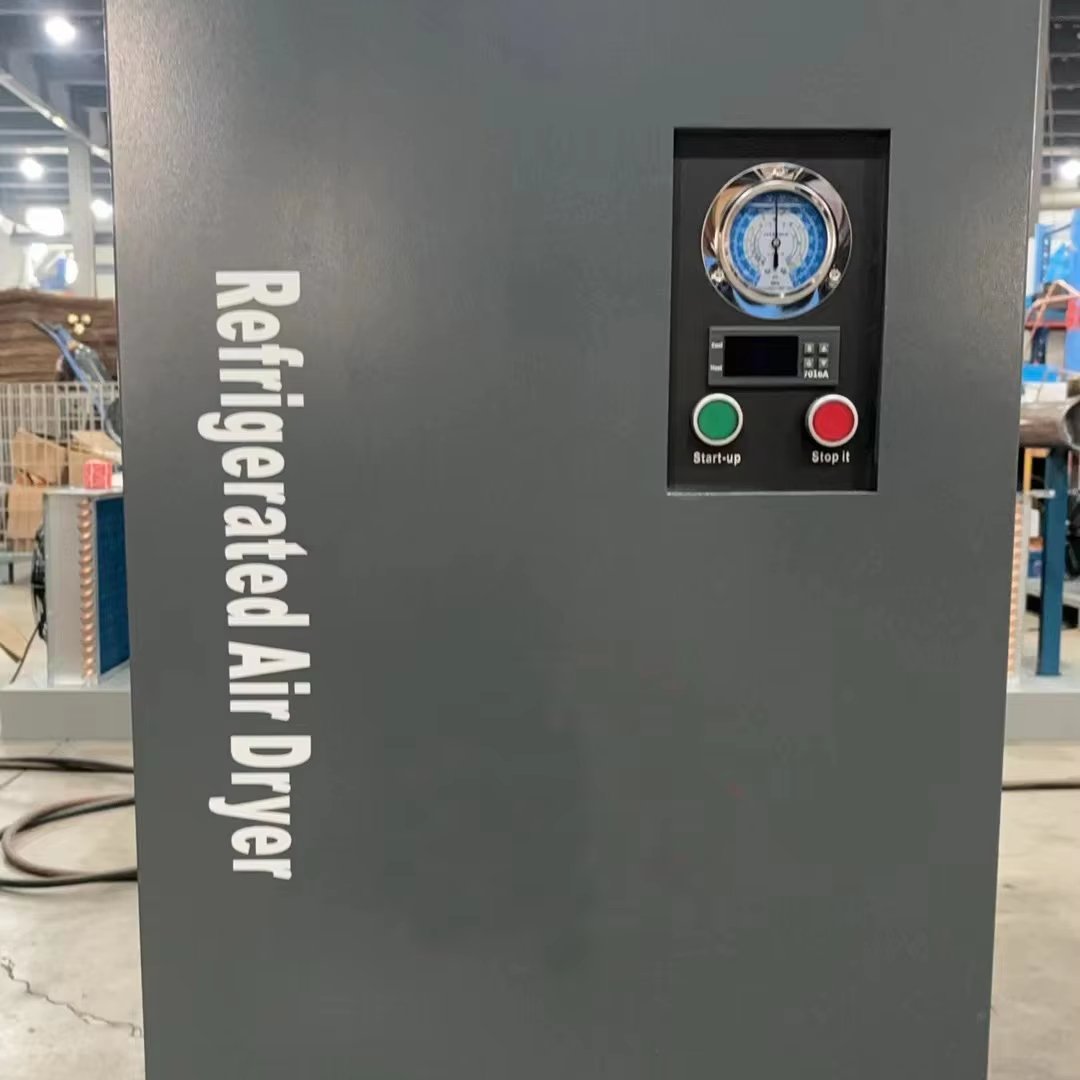
- What’s the coldest temperature any part of the air system will see? Above freezing → refrigerated (Class 4). At or below freezing → desiccant.
- Does anything downstream fail visibly if water shows up? If yes, add margin, and add a monitor. If it’s a machine shop with drainage, Class 4 is plenty.
- Does your process have a documented air quality class? If a customer or regulator specifies it, that’s your answer. Copy the class into the specification.
- How many hours a year does it run? Purge losses multiply by hours. Above roughly 4,000–6,000 hours it’s very worth pricing blower-purge or heated regeneration.
Still undecided? Send us your flow, pressure, ambient range and application through the 문의 페이지 and we’ll recommend one with the reasoning attached. There’s also a fuller look at the category in our general air dryers guide.
자주 묻는 질문
Which is better, refrigerated or desiccant?
Neither, honestly. They solve different problems. Refrigerated is right for indoor industrial work where keeping liquid water out of the pipe is enough, and it costs far less to run. Desiccant is the answer when air must survive freezing temperatures or meet a documented dryness class. Buying desiccant “just in case” is common and expensive.
What dew point do I need for spray painting?
Generally ISO 8573-1 Class 4 or better, meaning a refrigerated dryer at +3°C. Most paint problems are caused by oil or particulates rather than remaining vapour once you’re at Class 4, so check filtration before assuming you need deeper drying.
Why is there still water in my line when I already have a dryer?
Nearly always one of three things: no separator or receiver before the dryer, a condensate drain that isn’t actually draining, or a section of line that’s colder than the dew point you specified. Each of those is more common than an actual dryer failure.
Do I still need filtration?
Yes. Dryers remove water vapour, not particles or oil. A general-purpose setup normally uses a particulate filter before the dryer and a coalescing filter after. Filtration and drying are complementary, not alternatives.
Does an oil-free compressor mean I can skip the dryer?
No. This catches nearly everyone. An oil-free scroll compressor eliminates oil contamination, which is a big deal for downstream quality. Water is unaffected. It comes from the intake air either way, so you still need drying whenever water would cause trouble. Our discussion of oil-free advantages covers what you do and don’t gain.
Where should the dryer sit in the system?
Compressor → aftercooler → receiver (wet) → separator and drain → particulate filter → dryer → coalescing filter → distribution. Roughly that, with the 피스톤 or screw machine at the front depending on what you run.